
What Quality Control Processes Should a Reliable Drinkware Factory Have in Place?
In the competitive drinkware market, a reliable factory (like SFlask) prioritizes rigorous quality control (QC) processes to ensure products are safe, durable, and meet customer expectations. Let’s explore the key QC stages:
1. Raw Material Inspection
The foundation of quality drinkware lies in premium raw materials. A reliable factory will:
- Material Verification: Test materials (e.g., food - grade 304/316 stainless steel, BPA - free plastics, silicone seals) for compliance with safety standards (FDA, LFGB, etc.). For example, SFlask ensures its stainless steel meets food - contact safety requirements to prevent harmful substance leaching.
- Supplier Audits: Evaluate suppliers’ quality management systems, production capabilities, and compliance history. Only approved suppliers with consistent quality records are partnered with.
2. In - Process Quality Monitoring
During production, continuous checks prevent defects from escalating:
- Station - by - Station Inspections: At critical stages (stamping, welding, coating, assembly), QC teams verify dimensions (e.g., cup wall thickness), structural integrity (e.g., weld strength), and aesthetic quality (e.g., smooth coatings). For instance, in SFlask’s production, welds are inspected for gaps or weak points to avoid leaks.
- Automated Testing: Use technology like laser scanners (for precision) or pressure testers (for leak detection) to identify issues in real - time, reducing human error.
3. Final Product Quality Testing
Before packaging, every product undergoes comprehensive testing:
- Functional Testing:
- Leak & Seal Testing: Invert products or apply pressure to check for leaks (critical for insulated flasks). SFlask’s leak tests ensure even the most rugged use won’t cause spills.
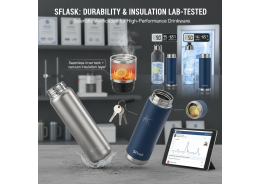
- Insulation Performance: Test heat/cold retention over time (e.g., 12h hot, 24h cold) to meet product claims. SFlask’s insulation tests guarantee consistent temperature control.
- Safety & Aesthetic Checks: Inspect for sharp edges (risk of cuts), surface defects (scratches, dents), and chemical safety (e.g., no toxic coatings). All products must be visually appealing and safe to use.
4. Compliance & Certification
A reliable factory adheres to global standards and seeks third - party validation:
- Regulatory Compliance: Meet standards like FDA (USA), LFGB (EU), and national Chinese standards for food - contact materials. This ensures market access and consumer trust.
- Third - Party Certifications: Partner with agencies like SGS or Intertek to verify quality. Certifications (e.g., ISO 9001 for quality management) demonstrate commitment to excellence.
5. After - Sales Quality Feedback
Quality control doesn’t end at production. A factory like SFlask:
- Collects Customer Feedback: Monitors reviews, support tickets, and surveys to identify recurring issues (e.g., lid - related leaks, coating peeling).
- Implements Improvements: Uses feedback to refine processes (e.g., redesigning lids for better seals, upgrading coating formulas). This iterative approach ensures continuous quality enhancement.
Conclusion
A reliable drinkware factory (such as SFlask) integrates these QC processes—from raw materials to after - sales— to deliver safe, durable, and high - performance products. By prioritizing quality at every stage, they build trust with customers and stand out in a crowded market.


 English
 German
 French
 Russian
 Spanish
 Japanese
 Korean
 Portuguese
 Ukrainian
 Arabic
 Italian